US invites India to Paxsilica group to counter China
Why India joined Paxsilica and its role against China
The United States has invited India to become a full member of the PaxSilica group, a new global initiative focused on technology and critical resources. The announcement came from US Ambassador designate to India, Sergio Gor, after he assumed his role in New Delhi. He said he will officially present his credentials to the President of India this week.
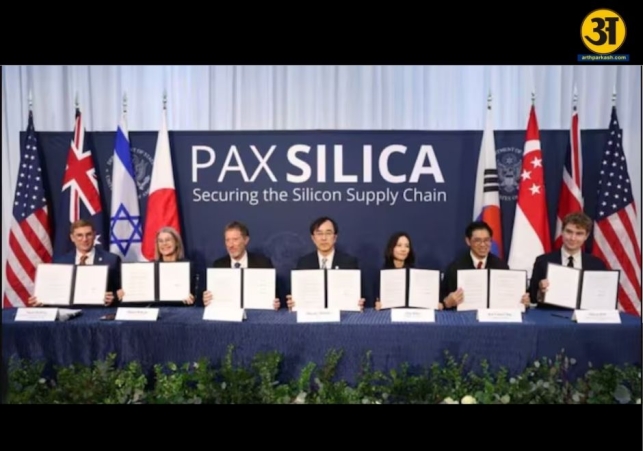
PaxSilica was launched by the US in late 2025 to secure the global supply chain for silicon, semiconductors, artificial intelligence (AI), and related critical minerals. The initiative takes its name from the ancient Roman term “Pax Romana,” which symbolized peace and stability. Similarly, PaxSilica aims to create a “technological peace” by building a reliable and resilient network of trusted partners in technology and manufacturing.
Ambassador Gor explained that PaxSilica is a strategic plan to develop a secure, prosperous, and innovation-driven ecosystem for the global silicon and semiconductor supply chain. The group focuses on the entire value chain – from raw materials and energy inputs to advanced manufacturing, AI development, and logistics. This is important because these technologies are critical for modern economies and national security.
PaxSilica already includes countries such as Australia, Japan, South Korea, the United Kingdom, Singapore, and Israel. These nations signed a declaration at the PaxSilica Summit held in Washington DC last year. By inviting India, the US aims to strengthen the group and integrate New Delhi into this high-tech partnership.
How PaxSilica will counter China
The US-led PaxSilica initiative is also a strategic move to counter China’s growing influence in global technology and manufacturing. China currently dominates many areas of the semiconductor and AI supply chain, giving it significant leverage over global technology markets. By building a trusted network of countries, the US aims to reduce reliance on China and secure critical technology supply chains for the future.
India’s inclusion in PaxSilica reflects its rising role in technology, manufacturing, and innovation. Ambassador Gor emphasized that India’s participation will help strengthen cooperation across the entire silicon value chain. This includes securing raw materials, developing advanced semiconductor technologies, supporting AI research, and improving logistics for global trade.
PaxSilica is designed to create a resilient ecosystem where member countries can work together to ensure that essential technologies are not disrupted by political tensions or supply chain risks. By joining this initiative, India will become part of a network of countries that can share resources, expertise, and technology to maintain stability and growth in high-tech industries.
ALSO READ: Maduro’s US custody case begins as he faces drug and narco‑terrorism charges
ALSO READ: India’s airport expansion is reshaping the country’s real estate landscape
The US sees PaxSilica as more than just an economic project. It is also a strategic alliance to maintain global technological leadership while preventing any single country from controlling critical supply chains. China’s dominance in the semiconductor sector has raised concerns about potential vulnerabilities for countries that rely heavily on its products. By working with trusted partners like India, the US aims to diversify sources, reduce risks, and maintain collective economic security.
Ambassador Gor highlighted that other countries already part of PaxSilica, such as Japan, South Korea, the UK, and Israel, bring advanced technology and innovation capabilities to the group. India’s addition will enhance the network even further. India has a growing semiconductor and electronics manufacturing sector, skilled workforce, and a fast-developing AI research community, making it a valuable partner for global technology cooperation.
In addition, India’s strategic location and large domestic market offer additional advantages for the group. It can serve as a hub for manufacturing and technology development, while also contributing to global supply chain security. Member nations of PaxSilica can coordinate investments, share best practices, and collaborate on research and development projects to maintain competitive advantages over China and other non-aligned countries.
The US hopes that PaxSilica will help ensure that critical technology resources, such as rare minerals and silicon, are not controlled by a single nation. This is particularly important as semiconductors, AI technologies, and advanced manufacturing become the backbone of modern economies. Ensuring a steady, reliable supply chain is essential for both economic growth and national security.
By inviting India, the US also signals its recognition of New Delhi’s increasing importance on the global stage. India has emerged as a major player in technology, trade, and manufacturing. Its participation in PaxSilica shows that it is trusted to collaborate on sensitive technologies and critical infrastructure projects with other leading nations.
India’s inclusion is expected to open new opportunities for technological collaboration and investment. Companies and research institutions in India can benefit from knowledge-sharing and joint projects with other member countries. At the same time, India can contribute its own expertise in areas such as AI development, semiconductor design, and renewable energy solutions.
PaxSilica is part of a broader strategy to create a network of countries that can collectively resist pressure from nations that seek to dominate technology markets. By working together, member countries can maintain a balance of power in global technology supply chains. The initiative also strengthens economic security by reducing dependence on any single country for critical inputs and products.
Experts believe that India’s participation will strengthen the group’s credibility and enhance its ability to challenge China’s influence. As one of the world’s largest and fastest-growing technology markets, India brings both scale and expertise. Its inclusion signals that PaxSilica is not limited to small or advanced nations but is open to emerging powers that can contribute to shared goals.
The announcement by Ambassador Gor reflects a significant diplomatic milestone. India joining PaxSilica will deepen ties between Washington and New Delhi in the technology and innovation sectors. It also emphasizes the US’s commitment to building a coalition of trusted partners to secure critical technology supply chains.
In conclusion, PaxSilica is a US-led initiative to secure the global silicon, semiconductor, and AI supply chains. It aims to establish technological peace by creating a network of trusted partner nations. By inviting India as a full member, the US seeks to strengthen cooperation, counter China’s dominance, and ensure collective economic and technological security. India’s growing capabilities in manufacturing, technology, and AI make it a key partner for the initiative. This move reflects the changing dynamics of global technology leadership and the increasing importance of strategic partnerships in securing the future of critical industries.
Related News